
Santiago, Chile – On January 23, Chile’s Socialist Party convened a meeting of political parties to form an alliance in opposition to the incoming José Antonio Kast administration. But the invitation was notably only extended to the center-left, effectively excluding sectors of the hardline left – including the Broad Front coalition and the Communist Party – from the opposition.
The exclusion of major parties from the coordination agreement underscores divisions in Chile’s left and threatens to weaken its ability to challenge the incoming hard-right government as it prepares to take office.
Specifically, the decision, interpreted as a definitive break with the Broad Front and the Communist Party, could expand Kast’s leverage in negotiating key initiatives of his future administration.
The main risk for the opposition is that the absence of a cohesive bloc could grant the new president greater negotiating power, warns political scientist Alfonso España, a researcher at Horizontal, political studies center.
In this scenario, Kast’s legislative strategy would involve seeking individual or bloc-based alliances to navigate a fragmented Congress.
Less than 50 days before the end of his term, President Gabriel Boric publicly called for unity within the governing coalition to contain the fallout from the rift.
“People do not want to see infighting or public exchanges through the press. They want to see us working; they want to see us united for Chile,” he said at a press briefing. However, the appeal failed to reverse a division that already appeared entrenched.
The rift stems from strategic and political differences between a more centrist left and hardline sectors, as well as accumulated frustration over the lack of agreements and coordination during the Boric administration.
For the center-left, this lack of leadership and political coordination eroded the viability of a common opposition project.
“The lack of leadership and mediation from President Boric was a politically relevant factor in this fragmentation,” said Marcelo Mella, an academic at University of Santiago, Chile (Usach). In his view, the president failed to convene a unifying forum or mediate long-standing tensions in a timely manner.
Tensions escalated after the Broad Front and the Communist Party accused Democratic Socialism of supporting legislation they argued undermined the credibility of the government and the hard left. One of the main flashpoints was the Nain–Retamal Law, promoted by Boric and passed in April 2023 following the killing of two police officers.
The debate resurfaced following the acquittal of former lieutenant Claudio Crespo in the Gatica case, a ruling that revived questions about the scope of the law and its impact on human rights cases. The decision triggered a new internal clash: the Broad Front and the Communist Party blamed the Socialist Party and the PPD for backing the law, while the latter defended their stance.
“The government should not have endorsed a law incompatible with human rights,” said Broad Front lawmaker Maite Orsini. The Socialist Party responded that “if the Communist Party believed this law opened the door to legal aberrations, it should have left the government instead of remaining while benefiting from positions and responsibilities.”
This scenario led Democratic Socialism to promote separate opposition blocs to confront the next government through distinct strategies. During the coordination meeting, former PPD senator Guido Girardi said the Broad Front and the Communist Party are “obsolete projects” with “no future projection.”
Despite the split, both blocs agree on safeguarding social gains and sustaining a progressive agenda. However, they will operate from separate spaces and cooperate only selectively to secure legislative majorities, in a context where opposition fragmentation could benefit the incoming Kast government.
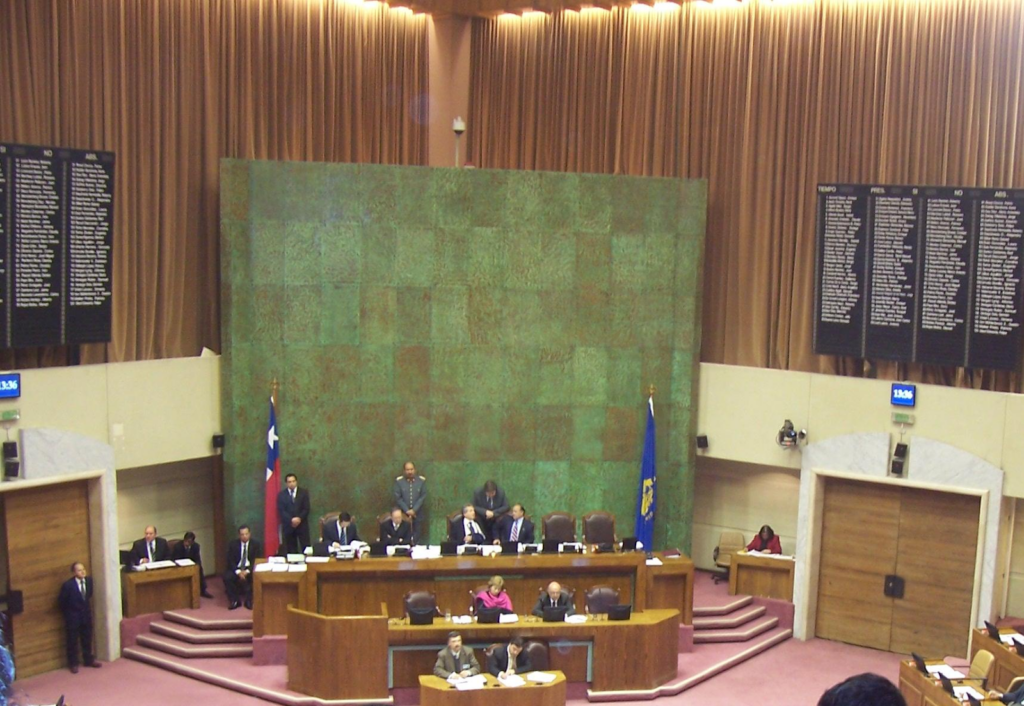
Featured image description: Chamber of Deputies at the National Congress of Chile, Valparaíso
Featured image credits: Leandro Kibisz via Wikipedia
The post Reconfiguration of the Chilean opposition: Center-Left and radical sectors chart divergent paths ahead of the Kast administration appeared first on Latin America Reports.