
Over a month has passed since Julio Curo-Churata, a 47-year-old Peruvian immigrant, father, handyman and construction worker who had been living in the United States for 17 years, died under unclear circumstances in the custody of the U.S. Immigration and Customs Enforcement (ICE).
His death is the 37th this year in ICE detention centers, according to the agency’s official Detainee Death Reporting, and it’s the first of a Peruvian citizen in ICE detention, according to Peruvian officials.
Curo-Churata’s family members and Peruvian officials continue to press U.S. authorities for official documents related to his death, despite ICE’s own policy to release their official Detainee Death Report no later than 30 calendar days after a detainee’s death.
At the time of publication, Curo-Churata’s information has not been added to ICE’s official Detainee Death Reporting webpage.
‘We don’t know what happened; he just got sick’
Curo-Churata was initially arrested in Maryland before being transferred by Enforcement and Removal Operations (ERO) Baltimore to ERO New Orleans on June 29, 2026.
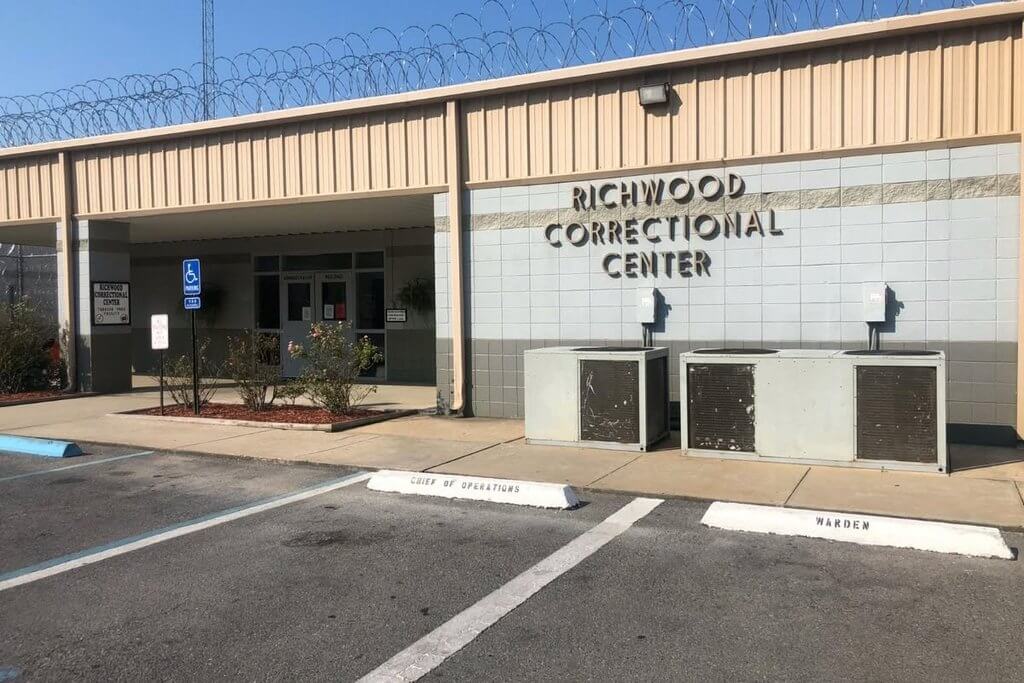
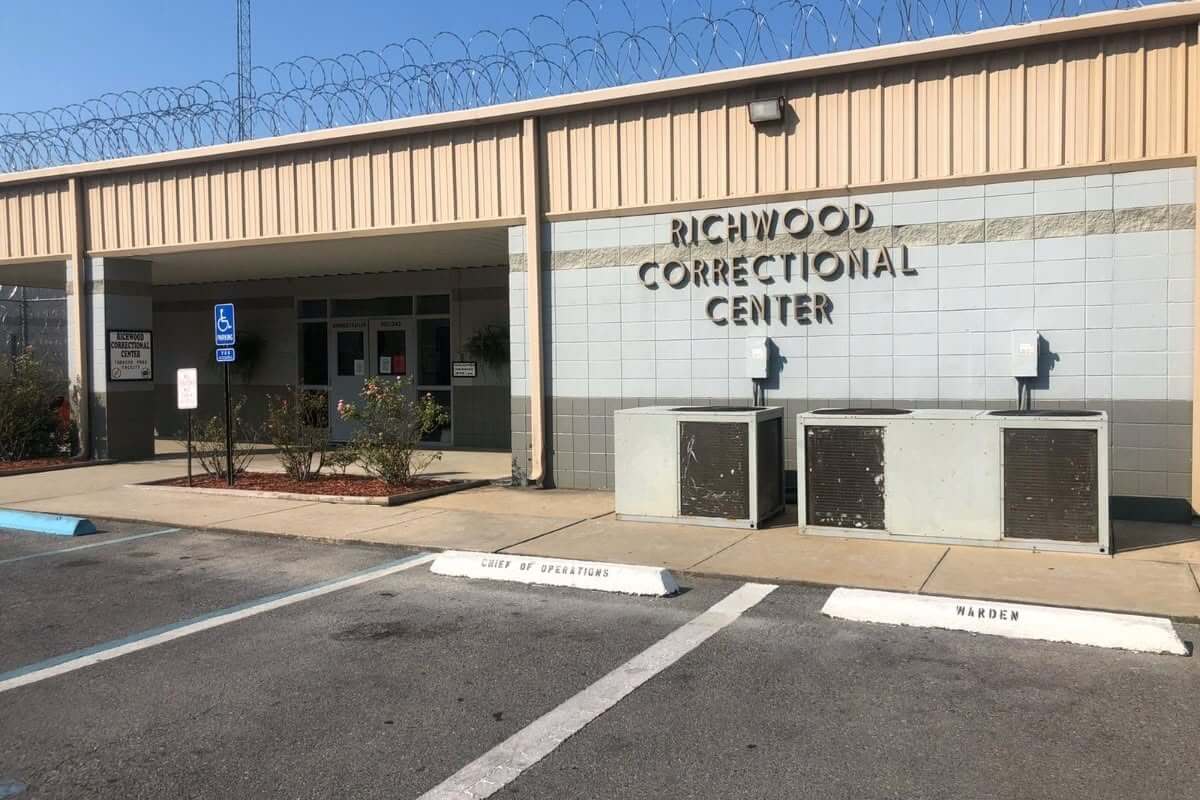
He was subsequently held at the Richwood Correctional Center in Monroe, Louisiana. On the evening of September 28, his health suddenly deteriorated.
According to an official press release from the agency, he was rushed to Ochsner LSU Health Monroe Medical Center at 8:14 p.m., where “despite life-saving efforts,” he was pronounced dead at 4:01 a.m. the following morning.
However, his wife, Verónica Ramírez, questioned the official account, telling reporters that her husband had no underlying health conditions. “He was a healthy person with no illnesses. That’s why this situation is so painful—it was so sudden,” she shared.
Ramírez also detailed her harrowing attempt to get information from authorities regarding her husband’s condition. “I asked about my husband, and they requested his Alien Registration Number and name, telling me they would call me back,” she recalled.
“About 20 minutes later, I received a call not from ICE, but from a funeral home informing me that my husband had died and that his body was in their care. The worst part is that the officer simply told me, ‘We don’t know what happened; he just got sick, we took him to the hospital, and he died,’” Ramírez stated.
The tragedy marks a precedent for Peru’s foreign service. In an interview with Latin America Reports, María de Fátima Trigoso Sakuma, Consul General of Peru in Houston, confirmed that this is the first recorded case of a Peruvian citizen dying while under ICE custody.
Trigoso Sakuma explained that the consulate was first alerted through an emergency phone call placed by an ICE field officer in New Orleans at 9:00 a.m. on September 29. “Then, at 10:00 a.m., they sent us an electronic communication formalizing the notification, after which Mrs. Verónica reached out to us,” the consul general stated, referring to Curo-Churata’s wife.
Given the gravity of the incident—which has drawn sharp attention across Peruvian media and the diaspora in the U.S.—a consul was dispatched to New Orleans on October 2 to meet directly with ICE authorities, according to the consul general.
“During that meeting, ICE official [Brian] Acuna, Deputy Field Office Director for ERO New Orleans, indicated that the preliminary autopsy points toward a heart blood clot as the cause of death,” she explained.
However, the formal documentation remains stalled due to the agency’s lengthy and rigid procedural timelines.
Peruvian authorities have repeatedly pressed for the release of the official autopsy report and death certificate. “Once we have the forensic report, we will have the legal standing to request a deeper investigation,” Trigoso Sakuma noted. “Without that document, we are essentially operating in the dark.”
Despite a formal diplomatic note submitted on October 5 urging the release of the findings, U.S. officials have yet to deliver the signed paperwork. “They informed us the report was ready, pending only a signature,” she added.
A family awaiting answers
The delay creates a critical administrative bottleneck for the family. Without an official death certificate, Peruvian authorities cannot register the death with the National Registry of Identification and Civil Status (RENIEC) in Peru.
“Immigration policy is extremely restrictive and limiting,” Trigoso Sakuma concluded—a perspective shared by Ysabel Lonazco, an immigration attorney with over seven years of experience in the United States, who also talked with Latin America Reports about the case.
“ICE’s procedures are deeply uncertain and arbitrary; there is simply no transparency,” Lonazco said, pointing to systemic opacity and the constant fear surrounding the agency’s actions. “I have clients in detention who have explicit judicial release orders, yet ICE refuses to set them free.”
When asked about potential legal avenues if documentation regarding the Peruvian citizen’s death remains delayed, Lonazco explained that the family could file a federal civil lawsuit. “If I am requesting case records and they are withheld, I can petition a federal judge to compel disclosure,” she stated.
Should Curo-Churata’s family pursue an investigation into potential medical negligence, the attorney outlined that the family could seek financial compensation or civil penalties if ICE’s actions are determined to involve criminal wrongdoing or negligence.
Regarding the status of the two previously mentioned documents, Latin America Reports attempted to communicate with the ICE press office but did not receive a substantive response beyond the initial press release issued on the day of the death. “The information available is what is included in the press release,” a spokesperson emailed.
According to the agency’s press release, on September 18, 2026, an immigration judge denied Curo-Churata’s applications for “relief and voluntary departure.”
Under the requirements for detainee deaths outlined in the U.S. Immigration and Customs Enforcement (ICE) guidelines updated on June 2 of this year (ICE Directive 11003.7), the agency mandates that “no later than 30 calendar days of the detainee death, the Assistant Director or Custody Management must ensure the Detainee Death Report is completed and made available on the ICE public facing website.”
Furthermore, it stipulates that no later than 60 calendar days, “the AD for Immigration Health Service Corps must ensure the Mortality Review is completed and distributed to the relevant offices, as appropriate.”
The directive does not explicitly specify a deadline for providing the death certificate or medical report directly to the deceased’s family. This absence of clear timelines has drawn concerns, particularly given the delicate nature of the case, as the family awaits a thorough investigation to clarify the exact cause of death.
“In accordance with the policy, ICE notifies the relevant parties and reports the death of any detained alien in a timely, accurate and appropriate manner,” ICE stated. “Any death that occurs in ICE custody is a significant cause for concern. ICE prioritizes the health, safety and well-being of all aliens in its custody.”
Nevertheless, many actions carried out within detention centers raise suspicions regarding the conditions detainees face. The American Immigration Council published an article on July 15, 2026, regarding “allegations of abuse and mistreatment in immigration detention centers.”
“Physicians and human rights groups report that 2026 is on track to be the deadliest year in ICE’s history. Among their complaints, detained noncitizens alleged that U.S. Immigration and Customs Enforcement (ICE) routinely engaged in medical neglect, served spoiled food, and used coercive practices to get people to sign deportation paperwork,” they indicated.
Caught between extended administrative timeframes for granting essential documents and the continuous demands from the Peruvian authorities, days continue to slip by for the grieving family.
Featured image: Julio Curo-Churata
Image credit: Marxlin Bernedo via The Baltimore Banner.
The post Grieving family, Peruvian diplomats press for answers following immigrant’s death in ICE custody appeared first on Perú Reports.
The post Grieving family, Peruvian diplomats press for answers following immigrant’s death in ICE custody appeared first on Latin America Reports.