
Tens of Thousands of Displaced People are Stuck in Mexico’s Poorest State?
Marshall Plane, CLALS Researcher and the Immigration to New York City Research & Data Coordinator
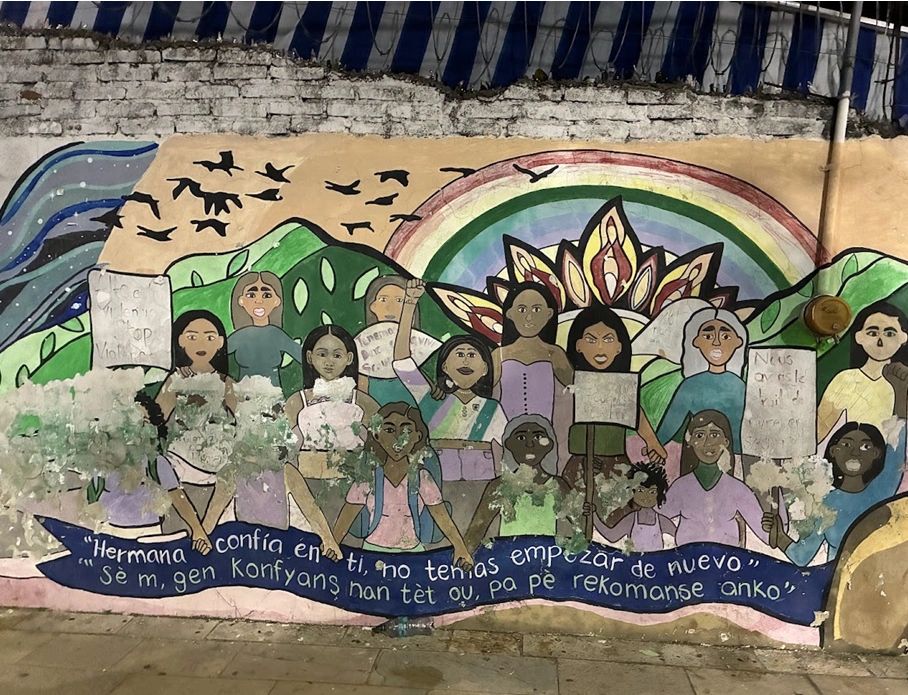
Note: Names have been changed where needed for interviewee privacy.
At 19, Samantha summoned the courage to leave her abuser, who is a gang member and the father of her three-year-old son. She knew this might also mean leaving her country. “In Honduras, we have so many femicides, and you can’t rely on the police because they’re working with the same gangs who commit them,” she told me.
Yet Samantha’s departure was quicker and more painful than expected: her abuser followed through on his threat to have her father killed, and she was told she had a matter of days before meeting a similar fate.
For decades, people fleeing such situations in Central America have hoped to reach the United States. By May 2026—eight months after leaving Honduras—Samantha instead found herself living in a shelter near Tapachula, a city just twenty miles north of the Mexico-Guatemala border, and navigating the asylum bureaucracy of Mexico rather than the US.
When we spoke, Samantha was spending her days in the shelter’s sweltering backyard caring for her son. Her new partner—who had similarly fled gang violence in Ecuador—worked day jobs in the coffee and banana fields surrounding Tapachula, which sits in the humid coastal lowlands of Chiapas, Mexico’s southernmost state.
“Here I feel trapped,” Samantha told me. “Once the current president is no longer there, I want to go to the United States. I feel that it’s safer there and that there my son will have opportunities to grow, to study, to have a better life.”
Lingering in the shade behind this austere Catholic shelter were dozens of migrants in similar states of limbo. Their unusual visitors—myself and other students visiting Chiapas as part of a two-week migration course organized by Juniata College and the Universidad Autónoma de Chiapas—provided many with a unique opportunity to vent their frustrations.
Throughout our time in Tapachula, the fruits of a longtime goal of US immigration policy—to make the journeys of northward-bound asylum seekers terminate in Mexico—were on full display. This unassuming city of 350,000 has become a kind of purgatory for people fleeing the Western Hemisphere’s worst humanitarian crises. Unable to enter the United States under the second Trump administration’s draconian policies, many have decided that, for the time being, Mexico offers the best available respite from hunger and violence in their countries of origin.
Tapachula is the first city migrants reach after crossing from Guatemala into Mexico. The manager at Albergue Belén, a Catholic shelter, told us that since the 1980s, thousands of mostly Central American migrants have passed through Tapachula each year on their way to the United States. In the early 2020s, they were joined by Cubans, Haitians, South Americans, Africans, and Asians. Olga Sánchez Martínez, director of the shelter Jesús el Buen Pastor, said that spending by northward-bound migrants had long been central to Tapachula’s economy.
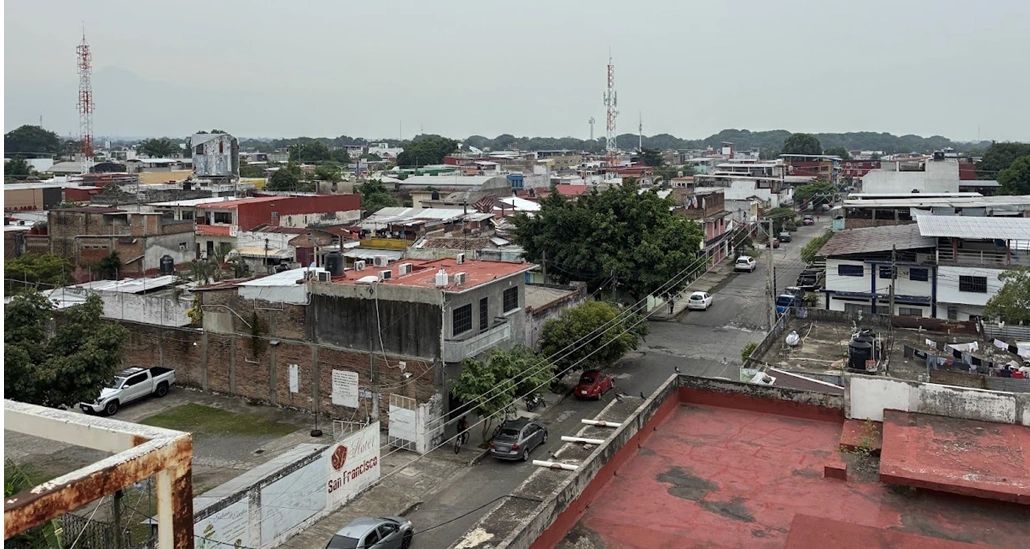
At the end of 2023, Mexico—at the insistence of the US, which is determined to prevent people from moving northward—began requiring asylum seekers to remain in the city where they first seek asylum while their case is pending. This policy, combined with the closure of the US border, has rapidly transformed Tapachula from a transit hub to a holding ground.
None of the migrants we spoke to described Tapachula, a poor city in Mexico’s poorest state, as their preferred destination. Yet due to its proximity to the border, Chiapas received 66 percent of the 52,000 asylum applications submitted in Mexico in the first nine months of 2025. While their cases are being processed—which now frequently takes upwards of a year—those applicants are bound to Tapachula by the mandatory biweekly check-ins at the city’s Commission for Refugee Assistance (COMAR) office.
Tapachula is now home to an estimated 60,000 migrants in addition to its 350,000 permanent residents. The largest groups are an estimated 20,000 Haitians and 18,000 Venezuelans. Cubans are perhaps the fastest-growing group: they represented nearly half of asylum applications in Mexico in 2025, and that was before a US oil blockade worsened Cuba’s already dire economic situation.
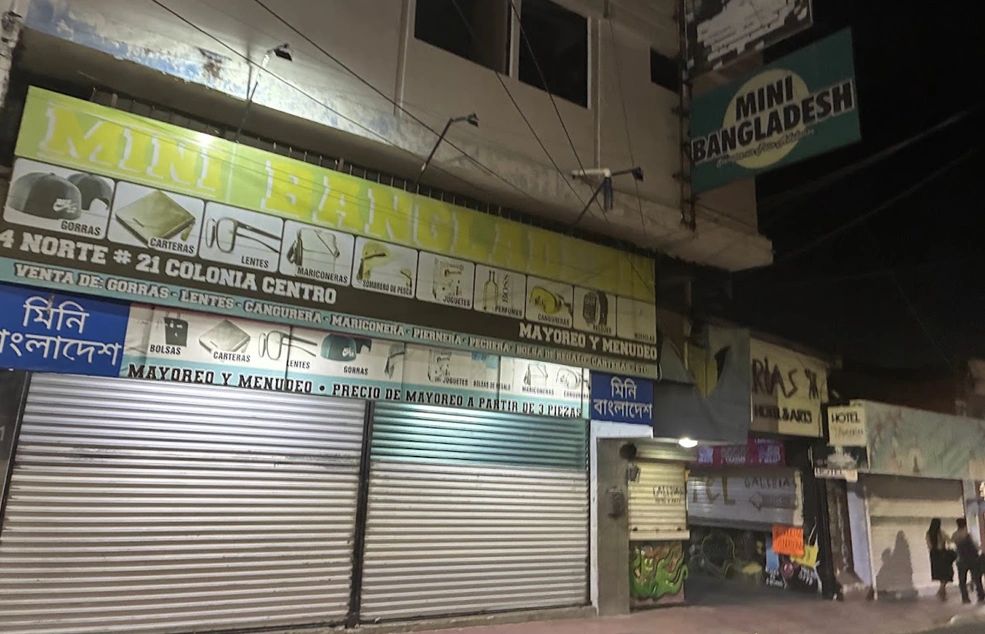
Due to color and language, Haitians are the city’s most visible migrants. As the sun rose on our first day in the city, I passed two men speaking Haitian Creole while loading cement barrels onto a pickup truck. A sticker on the truck’s rear window read: somos negritos, pero útiles a la sociedad. We are Black (using the diminutive form of the word), but useful to society.
On our third evening in Tapachula, I spoke with two of the many Haitians who were selling water bottles in the city’s lively central plaza. Both had crossed the border into the Dominican Republic in 2021 as Haiti spiraled into violence following the assassination of its president. “In Haiti there is no safety. There is no president,” said Jonel, the younger man, in accented but fluent Spanish.
“The United States is not helping Haiti to get out of this situation,” added his friend Bernard, noting that the gangs who control most of the capital are armed with trafficked US-made guns.
In 2025, an escalating deportation campaign led both to flee the Dominican Republic to avoid being sent back to Haiti. “In the DR, there is work, but you can’t be calm because immigration [enforcement] is looking for you every day,” said Jonel. “That’s why we crossed the jungle to come here. And well, here, it’s not as racist, but there’s no work.”
Jonel and Bernard both said they left home early each morning to look for construction or farm jobs. When none could be found, they would instead spend the day selling water bottles. “Imagine, you leave home at four, three in the morning. How much will they pay you for a day of work? Maybe 300, 250 pesos [$14.50-17],” said Bernard, who was supporting a wife and two children in Haiti with remittances. He hoped to eventually reunite with them and join his brother in Florida. Jonel, lacking family in the US, said he intended to settle in Tijuana, a Mexican border city where a sizeable Haitian community has emerged in recent years.
We heard these economic frustrations repeatedly during our time in Tapachula. According to Sánchez Martínez, Tapachula’s businesses have been struggling since 2025 as fewer migrants pass through the city and spend money, while the requirement for asylum seekers to stay in Tapachula has swelled the number of people looking for work and housing. Migrants and natives alike said this was depressing wages and increasing rents.
“I’m earning less now,” a Tapachula-born construction worker told me at a brightly lit taqueria near our hotel. “If I want 400 pesos [$23] a day and a Cuban will work for 250 pesos [$14.50], who do you think they’ll hire?”
Our server at the same taqueria, Ángela, was herself a Cuban migrant—one of over one million people who have fled the island this decade amid crippling shortages of food and medicine. Shortly after crossing into Mexico in October 2024, she and her fellow travelers were kidnapped by a cartel. “We were eight. Only three made it out,” she said. Ángela avoided a grisly death only because her aunt in the US helped pay the $5,000 ransom.
Without money to continue northward, Ángela began working in Tapachula and was still there when Trump took office. By May 2026, she had married a Mexican man and used her restaurant earnings to help her brother escape Cuba and join her in Tapachula. “We’ll see what happens, but for now I’m content here,” said Ángela.
“Most of us here are migrants,” Ángela told me, gesturing to her coworkers. “She’s Guatemalan, he’s Venezuelan, those two are Cuban, and in the back there’s also a Haitian.” Tapachula’s restaurant and nightlife sectors, she said, had become reliant on immigrant labor.
The relative stability Ángela achieved in Tapachula seemingly felt out of reach to the more recent arrivals we spoke to in the shelters. Once their asylum cases were processed, everyone planned to go to more prosperous locations: Mexico City, Monterrey, Ciudad Juárez, or Tijuana.
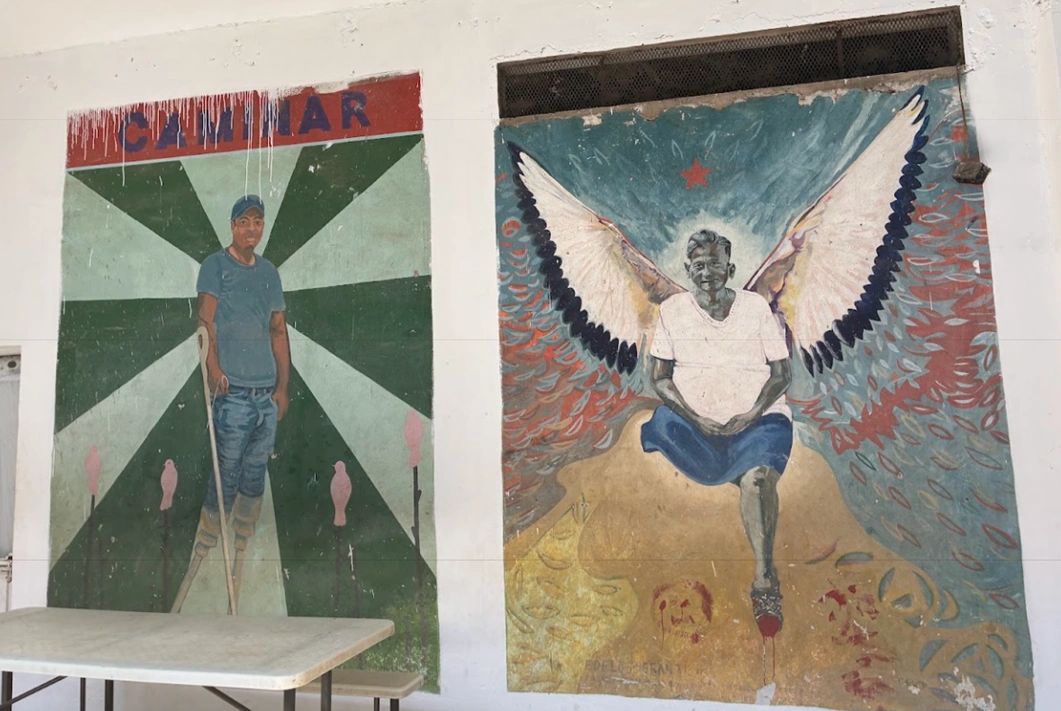
“Nobody wants to be here,” said Diego, a single father who fled Honduras with his three-year-old son in February 2026 when a gang demanded that he deliver drugs along his bus route. Like several other Hondurans I spoke to in the shelters, he said organized crime in the country had worsened to the point of intolerability.
“Here in Tapachula you make up to 300 pesos [$17] a day, and that’s if you find work. In Monterrey you can make 800 pesos [$46],” said Diego. Most of the jobs he found in Tapachula were day-to-day, and like many migrant workers, his promised wages had been withheld multiple times.
“We now see caravans forming on an almost weekly basis, and the main reason is the employment issue,” said the manager of Albergue Belén. “Some people who can’t find jobs here to sustain themselves while they go through the asylum process end up giving up and trying to get to places like Mexico City or Monterrey.”
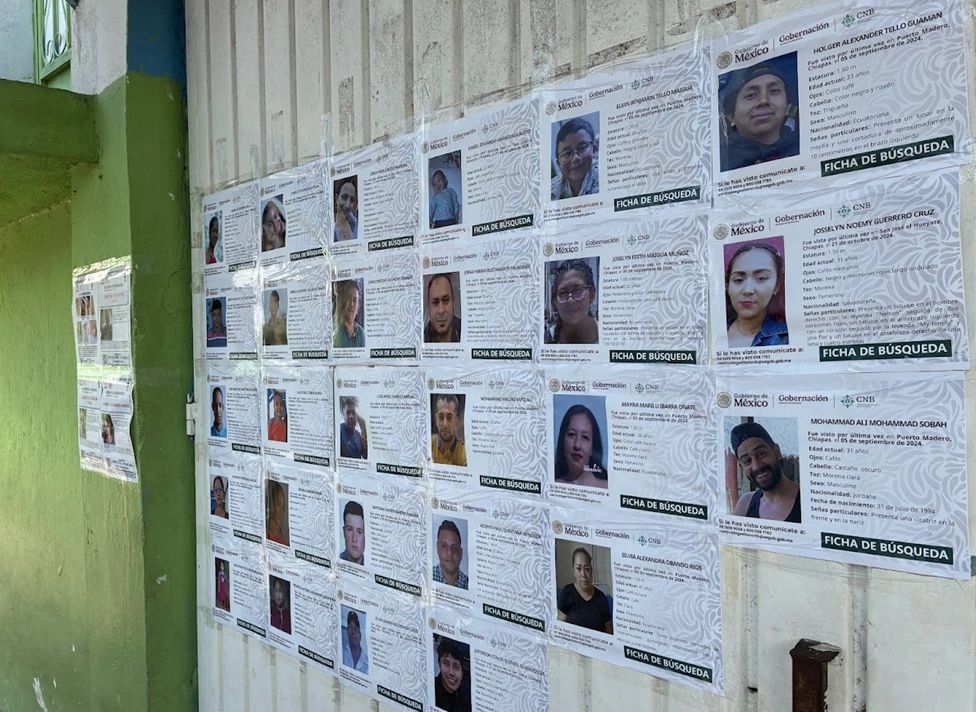
Sánchez Martínez said the same, and added that cartels had taken to extorting and kidnapping migrants who headed north on foot along Chiapas’s coastal highway. “We beg people not to go,” she said. “Just the other day, they disappeared a group of twelve Hondurans.”
Those who remain in Tapachula rely on support and guidance from two main sources: the large networks of co-nationals that have emerged in the city, and an underfunded but determined collection of NGOs and shelters dedicated to serving its refugee population. One of these is Casa Frida, an NGO that assists LGBT+ refugees. They hosted a panel for our group on our second day in Tapachula.
One of the speakers, Adrián Lozano, had joined the exodus from Cuba in 2024, not long after earning his degrees in theater and journalism. Material concerns put these dreams on hold. “The minimum [monthly] wage in Cuba is 2,500 pesos1. A carton of eggs costs 3,000 pesos,” said Adrián. Medical treatment, he said, is free but sparse: his mother was diagnosed with cancer in early 2024 and faced a years-long waiting period for her treatment, which Adrián suspected was partly due to his own record of anti-government statements.
Adrián’s partner, who had crossed the US-Mexico border in 2023 and settled in Phoenix, helped finance his flight out of Cuba. Due to Trump taking office, Adrián’s journey—and his relationship—ended shortly after he crossed into Mexico. With the help of Casa Frida, he found work as a waiter in Tapachula. His immediate priorities, he said, were to help his mother and younger brother in Cuba buy food, and eventually to bring his mother to Mexico for her cancer treatment.
“I don’t want to denigrate the importance of service work, but I studied to be a writer, a professional,” said Adrián. Tapachula lacked professional opportunities, he said, and he had also faced more homophobia there than he ever had in Cuba. (Another speaker, accustomed to intense homophobia in eastern Venezuela, reported the opposite experience.) Adrián said his dream was no longer to reach the US, but rather to build a career as a television writer in Mexico City.
While he hoped to see the Cuban government fall—even if it required violence or US intervention—Adrián said he did not plan to return to the island, even if things improved drastically. “In Cuba, I was happy, and they say if you were happy somewhere, don’t go back there,” he said.
Another speaker at Casa Frida, Natalie, candidly showed us the deep bruises on her neck—remnants of the abuse she had suffered as a trans woman placed in a men’s prison in Cuba. Lacking relatives abroad who could finance her journey to the US, she instead flew in 2023 to Russia, which allows visa-free entry for Cubans. In Moscow, she saved up money through sex work.
“It was my first time seeing the capitalist world, so I was amazed by some of the things they had. But it was also kind of a scary place to be. They saw me as some kind of exotic symbol,” said Natalie, who identifies as Afro-Cuban. Natalie used her earnings to fly to Nicaragua in 2024, but her journey northward was also cut short by the change in US policy.
Like the other panelists, Casa Frida helped her find housing, submit her asylum claim, and, she said, build a much-needed sense of community with other LGBT+ people. Nonetheless, like everyone I spoke to, Natalie found life in Tapachula constraining. She hadn’t found employment and was still relying on sex work against her wishes. “You know, like everyone, I have my goals, I have my dreams, and I know this isn’t the best place to achieve them,” she said.
I asked where that place was. Without hesitation, she responded that it was the United States. “I want to live a normal life. I want to get married, have kids, maybe start a business,” she said. “And like lots of us who have had to abandon our countries, I believe the United States is the best country to do that.”
“I know it’s not possible right now with this president,” she added. “But nothing in this world is forever.”
Edited by Ernesto Castañeda, Director of the Immigration Lab and the Center for Latin American and Latino Studies, and Catherine Grau, Research & Data Coordinator of the Immigration Lab.